CAN ELON SAVE THE AI TRADE?
The next opportunity may belong to the companies keeping the AI party from blowing a fuse.
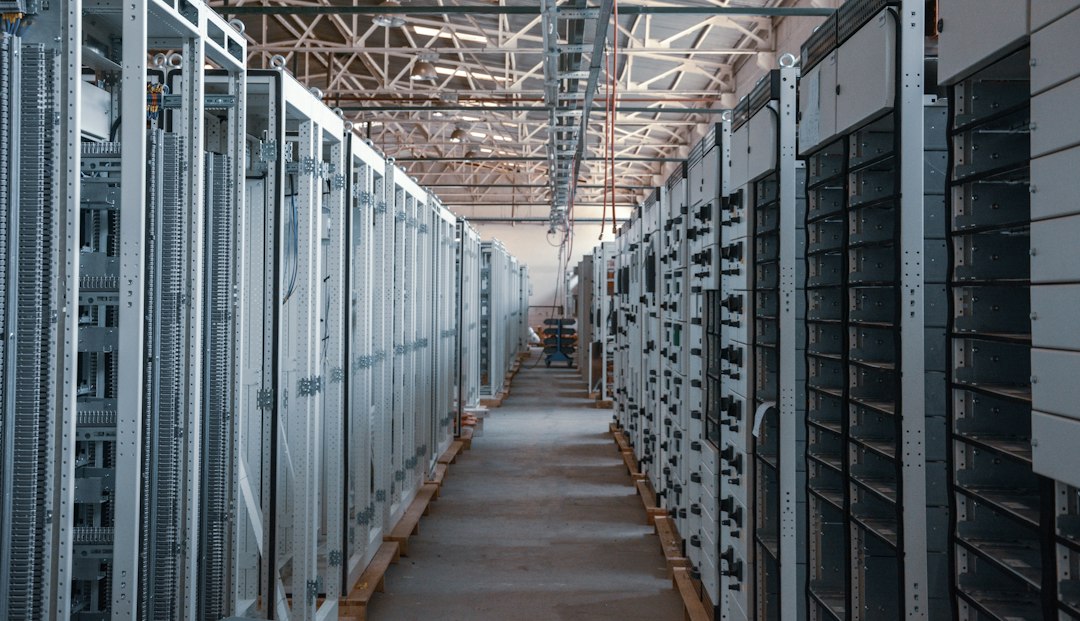
Imagine buying the world’s most powerful oven, opening a restaurant, hiring the chefs—and discovering that the building cannot handle the electricity.
Congratulations. You have an expensive kitchen decoration.
That is one way to understand AI’s infrastructure problem.
Companies can buy more processors. But those processors need electricity, cooling and a steady supply of data. If one part cannot keep up, expensive equipment can spend too much time waiting.
The investment question becomes practical:
What is holding the system back—and who gets paid to fix it?
First, what did SpaceX actually show?
SpaceX reported quarterly revenue of approximately $14.6 billion, up 161% year over year. Its Super Intelligence division generated $7.56 billion in revenue and $431 million in operating profit. “Super Intelligence” is the division’s name, not proof of a technological breakthrough. Source: SEC earnings release.
Here is the disclosed revenue breakdown:
| Component | Quarterly revenue | What we can establish |
|---|---|---|
| Advertising | $538 million | Separately disclosed. |
| SI solutions and infrastructure | $7.022 billion | Includes cloud services and AI software; separate totals are not provided. |
| Cursor | $608 million | Acquisition contribution, included within the business—not an extra amount to add on top. |
| Cloud/compute alone | Not separately disclosed | Cannot isolate from the combined category. |
| Grok and other software alone | Not separately disclosed | Cannot isolate from the combined category. |
| Total division revenue | $7.560 billion | Advertising plus solutions and infrastructure. |
The filing also confirms $16.444 billion in capital expenditure for the division during the quarter, more than twice its revenue. Source: SEC earnings release, segment data and Cursor acquisition disclosure.
So how can it report an operating profit while investing so much?
Think of a restaurant buying ovens expected to last several years. Accounting spreads their cost over their useful life rather than charging the entire purchase against one quarter’s profit.
The expansion still needs financing. Operating profit does not mean cash remained after paying for it.
Nor can we calculate the division’s free cash flow simply by subtracting capital expenditure from operating profit. We would also need operating cash-flow information, including changes in customer payments and supplier bills.
The useful conclusion is narrower: the business is generating revenue and operating profit while undertaking an enormous expansion. The return on that expansion remains the important test.
Supermicro supplied another encouraging clue
Supermicro estimated quarterly revenue of $18.5 billion–$19.5 billion, above its previous guidance of $14.5 billion–$15.5 billion.
Estimated gross margin improved to 12%–12.5%, versus earlier guidance of 10.4%–10.8%. These figures are preliminary and unaudited; full results are scheduled for November 3. Source: Supermicro’s October 20 business update.
That supports the case for continued equipment demand.
It does not establish that every customer will earn enough from AI to justify its purchases—or that every supplier’s shares are attractively priced.
Welcome to AI’s crowded kitchen
Here is the simple version:
- Processors are the chefs: they perform calculations.
- Memory is the preparation counter: it keeps information close enough to use quickly.
- Networking moves orders between stations.
- Electricity powers the kitchen.
- Cooling keeps the equipment from overheating.
Hire more chefs without expanding the counter, wiring or ventilation, and you may create an expensive traffic jam.
That is a bottleneck: one part of the system holds everything else back.
The opportunity is to find suppliers that can relieve those constraints profitably. The catch is that a severe bottleneck can delay entire projects, including purchases from those suppliers.
Five major players worth understanding
Vertiv: keep the chips cool
Vertiv supplies power and cooling infrastructure, including liquid cooling. It helps data centers operate increasingly demanding equipment.
Its second-quarter results raised 2026 adjusted earnings guidance to $6.65–$6.75 per share. Source: Vertiv’s second-quarter results.
The investment test is whether demand becomes profitable deliveries and cash. A promising order pipeline is useful; customers paying for completed work is better.
Eaton: the electrical system behind the excitement
Eaton supplies equipment that helps distribute, manage and protect electricity.
Few people discuss electrical equipment at dinner. Everyone notices when it stops working.
Its second-quarter presentation reported data-center orders up approximately 85% year over year. Management’s 2026 adjusted earnings guidance was $13.40–$13.60 per share. Sources: Eaton’s presentation and results release.
Watch whether orders become sales on schedule, with margins intact.
Schneider Electric: make the pieces work together
Schneider supplies electrical distribution, cooling and control systems.
Its Q3 release reported €11.46 billion in revenue, up 16.9% organically, and triple-digit growth in data-center demand. Importantly, data-center sales grew at a strong double-digit rate: demand growth and recognized sales growth are different measures. Source: Schneider’s Q3 release.
The question is how much profitable growth can follow—and how much investors already assume.
GE Vernova: somebody has to produce the electricity
GE Vernova supplies power-generation and grid equipment.
Management reported more than $5 billion in first-half electrification orders for data centers. It also said approximately 20% of gas-power gigawatts under contract related to data centers, with the remainder serving traditional customers. These are different business measures and should not be combined. Source: GE Vernova’s Q2 transcript.
This is a wider electricity-demand business with AI exposure. Large projects take time, and performance elsewhere in the company matters.
Micron: keep the chefs supplied
Micron supplies memory and storage that help computing systems access information.
It reported fiscal 2026 adjusted earnings of $75.52 per share, including $33.42 in the fourth quarter alone. Source: Micron’s fiscal 2026 results.
For valuation purposes, I would treat these as likely peak-cycle or near-peak-cycle earnings. That is a cautious analytical judgment, not confirmation that profits have already peaked.
They should not be multiplied by a normal earnings multiple without testing different scenarios: shortages persisting, pricing normalizing, and a downturn as supply catches demand.
A stock can look wonderfully cheap when the denominator—earnings—is temporarily enormous.
Prices worth investigating
An essential supplier can still be an expensive investment.
The table below contains rough fair-value screens, not valuation estimates. Each screen multiplies an earnings figure by a chosen P/E ratio. It is a starting filter, not a discounted cash-flow model or a calculation of intrinsic value.
| Company | Earnings input | Chosen P/E | Rough screen |
|---|---|---|---|
| Vertiv — VRT | $6.70, midpoint of company adjusted EPS guidance | 20–22× | $134–$147 |
| Eaton — ETN | $13.50, midpoint of company adjusted EPS guidance | 20–22× | $270–$297 |
| Schneider — SU, Paris | €10, illustrative adjusted EPS assumption | 19–21× | €190–€210 |
| GE Vernova — GEV | No normalized earnings assumption established | — | No screen assigned |
| Micron — MU | Requires earnings-cycle scenarios | — | No screen assigned |
Vertiv and Eaton’s inputs come from their linked results above. The selected multiples and Schneider assumption are analytical choices. The arithmetic is transparent; that does not make the assumptions certain.
Adjusted earnings exclude some expenses. Before buying, compare them with standard accounting earnings, cash flow, debt and investment needs. Schneider’s euro prices refer to its Paris-listed ordinary shares.
A share reaching a screen means “investigate again,” not “buy automatically.”
What would invalidate the thesis?
The argument is that infrastructure constraints create profitable work for these suppliers. Here is what could weaken or overturn it:
- AI spending cuts: major customers reduce construction and equipment budgets.
- Customer cash pressure: cloud companies’ free cash flow deteriorates, making expansion harder to fund.
- Cancellations or repeated delays: orders fail to become deliveries and payments.
- Scarcity eases faster than expected: more supply, better efficiency or new designs reduce suppliers’ pricing power.
- Margins weaken despite growing sales: suppliers win business without keeping enough profit.
- Memory supply catches demand: Micron’s selling prices and earnings fall materially.
These are tests to monitor, not claims that those developments are already happening.
Faster, cheaper infrastructure would be good for AI adoption. It could still be disappointing for shareholders who paid for years of shortages.
Buy gradually. Keep thinking.
Dollar-cost averaging means investing a fixed amount at regular intervals. It spreads entry dates; it does not fix an overvalued stock or a weakening business.
Set a budget and a maximum position size. Reassess after earnings. Add because the business still supports the case, not simply because the price fell.
SpaceX and Supermicro offered encouraging evidence about demand. The investment opportunity depends on who can serve that demand profitably—and what shareholders pay to participate.
Take notes: find the bottleneck, find who can fix it, then check the price tag.
Even the best electrician can send an unreasonable bill.
For informational and educational purposes only. Screens are conditional research tools, not recommendations, price targets or guarantees. Investing involves the risk of loss.