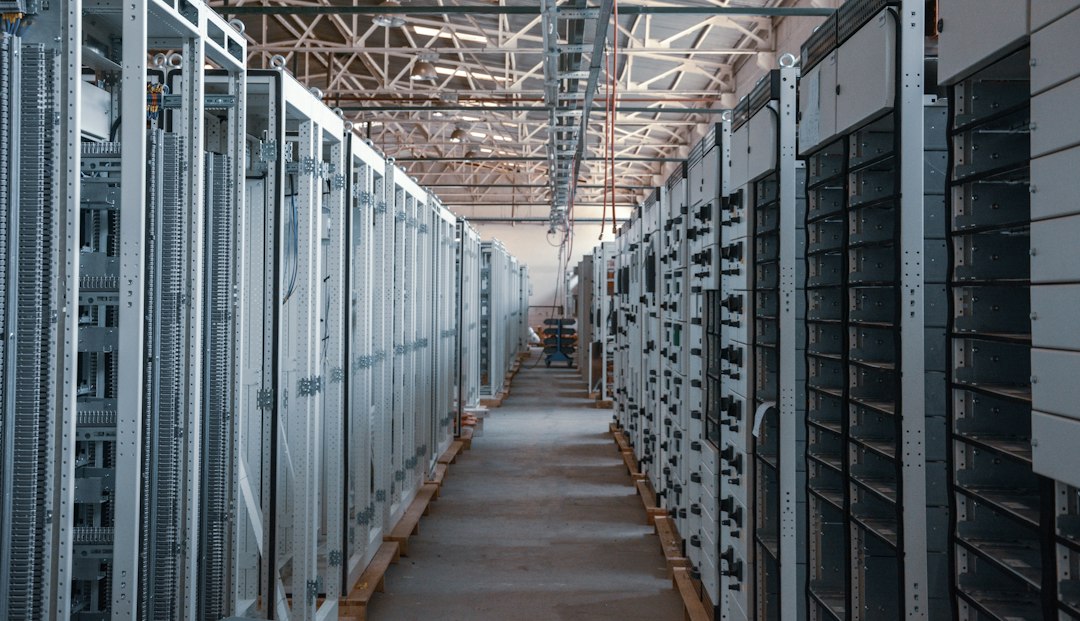
Copper: The Next Big Story Behind AI?
Copper: The Next Big Story Behind AI?
Artificial intelligence is usually described in digital terms: models, chips, compute, data, algorithms. But beneath that digital world sits something stubbornly physical: copper.
AI may live in the cloud, but the cloud has a very physical address. Running AI at industrial scale requires data centers, and data centers require enormous amounts of electricity. That means transformers, cooling systems, transmission lines, distribution networks—and copper running through much of it.
Which raises a surprisingly old-fashioned question about one of the world’s newest technologies: Can the physical world expand fast enough to support the digital one?
Silicon Valley can build a smarter model in months. A copper mine isn’t a magician. Easy, Silicon Valley.
AI Walked Into an Existing Problem
If AI could read this article, it might object: Why is everyone blaming me? Lately, I’m becoming an easy target. Humans! Fair point, AI. Human here. Let’s distribute the blame fairly.
Copper was busy long before ChatGPT arrived. Electric grids, EVs, renewable energy, battery storage, industrial equipment and construction were already competing for the metal. AI simply walked into an already crowded room—and AI happens to be very hungry for electricity.
Now stay with me. We need a few boring numbers. I hate when the facts force me to become professional.
Modern data centers can require roughly 30–40 metric tons of copper for every megawatt of installed capacity, with some AI-training facilities requiring even more. Global copper demand, meanwhile, is projected to rise from roughly 28 million tons today to around 42 million tons by 2040.
The Copper Clock
Here’s the problem in its simplest form: while demand is rising, bringing a major new copper discovery into production takes roughly 17 years on average. Seventeen years. In AI time, that’s approximately forever.
A hyperscaler can approve billions in capital expenditure in a quarter. Entire generations of AI models can be developed, launched and replaced while a mining project is still working through permits, financing and construction.
Think of AI as buying a Ferrari while the road outside the house is still being built. The Ferrari can become faster every year; the road cannot. Ferraris don’t fly. That’s the Copper Clock.
But this does not mean the world is about to run out of copper. Higher prices encourage new production. Mines expand. Recycling grows. Engineers redesign systems. Aluminum and fiber can substitute for copper in certain applications.
Markets adapt—they always do. The problem is time.
The International Energy Agency estimates that even after accounting for announced mining projects, projected supply could still fall roughly 25% short of 2035 primary copper requirements under its stated-policies scenario.
That doesn’t guarantee a shortage. It means the system will have to adjust—and adjustments create costs, investment and sometimes opportunities.
Follow the Power
AI doesn’t need copper simply because servers contain wires. It needs copper because servers need power.
The further back you go, the slower the system becomes. A software company can order more GPUs, but those GPUs need a building. The building needs electricity. Electricity needs a grid connection. The grid may need new transformers, substations and transmission infrastructure.
This is why focusing only on Nvidia—or whichever AI company dominates the headlines—can leave investors looking at only one end of the boom. Sometimes the interesting economics are hiding several steps behind it.
Copper itself probably won’t kill the AI boom. One modeled 230 MW AI-training facility costing around $3 billion would require roughly $115 million worth of copper under the study’s assumptions—less than 4% of the estimated project cost.
So a hyperscaler probably isn’t going to cancel a multibillion-dollar facility because copper became expensive. The more interesting constraint is whether the infrastructure can actually be delivered on time.
Can transformers arrive? Can the grid connection be completed? Can transmission capacity expand? Can enough power reach the facility when the servers are ready?
In other words, the copper problem may appear less as “we ran out” and more as longer lead times, delayed projects and more expensive infrastructure. Less dramatic. Still expensive.
Engineers Will Adapt
Fortunately, copper isn’t irreplaceable everywhere. When something becomes expensive enough, engineers tend to become very creative.
Aluminum can replace copper in some electrical applications. Fiber optics already substitute for copper in certain data-center connections. Higher-voltage systems can reduce material needs, and recycling is becoming increasingly important because copper can be reused without losing its essential properties.
These adaptations matter, but they don’t make the constraint disappear. They buy time. They don’t repeal geology.
Follow the Bottleneck
And this is where the story becomes interesting for investors.
A structural bottleneck does not automatically mean buy copper—and it certainly doesn’t mean buying every company that mentions copper in an investor presentation.
The better question is: Where does the constraint turn into money?
Maybe it appears in existing copper production. Maybe in electrical equipment. Maybe transmission and grid construction. Maybe recycling. Maybe materials that substitute for copper. Or perhaps investors have already discovered the opportunity and priced it accordingly.
That’s why I prefer following the bottleneck rather than following the headline. The research process becomes:
Because a wonderful story can still be a terrible investment at the wrong price. And the chart matters too: the chart isn’t the thesis. It’s a test of whether the market is beginning to agree with it.
AI can innovate at software speed. The infrastructure beneath it cannot. The question isn’t whether the physical world eventually catches up. It’s what happens—and who benefits—while we’re waiting.
Can you beat the Copper Clock?
Three questions. No hard hat required.
What is the article’s central copper problem for AI?
Why can copper still matter if it is less than 4% of the modeled cost of one AI facility?
Which sequence matches the research process in the article?
Follow the bottlenecks behind the headlines.
Sources & Method
This article draws primarily on S&P Global’s 2026 research on copper demand, data-center infrastructure and mine-development timelines, together with the International Energy Agency’s Global Critical Minerals Outlook 2026. Estimates are scenario-based and should not be interpreted as certain forecasts.